
 BG
BG  BY
BY  CY
CY  CZ
CZ  DE
DE  EE
EE  ES
ES  EU
EU  GR
GR  HU
HU  IS
IS  IT
IT  LT
LT  LV
LV  MY
MY  PL
PL  PT
PT  RO
RO  SK
SK  TR
TR  UA
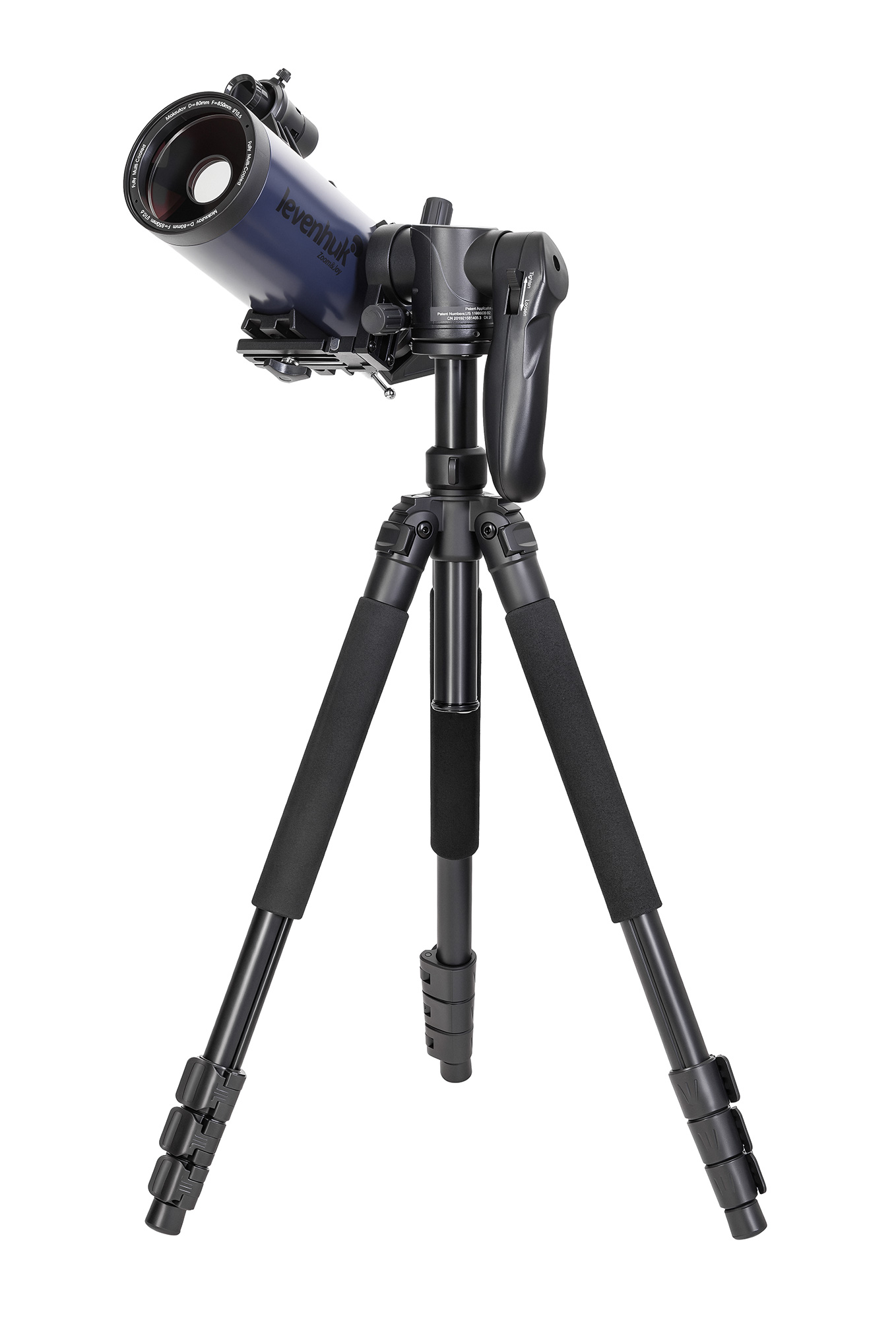
UA Levenhuk New Skyline BASE МАК 80/850 AZ-M Telescope
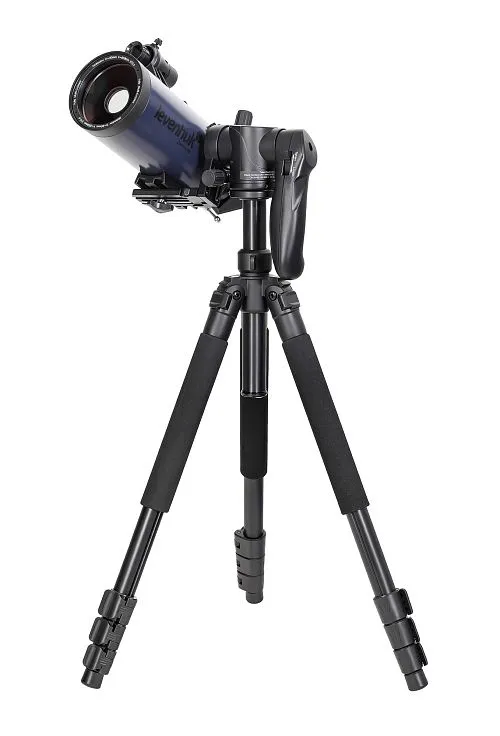
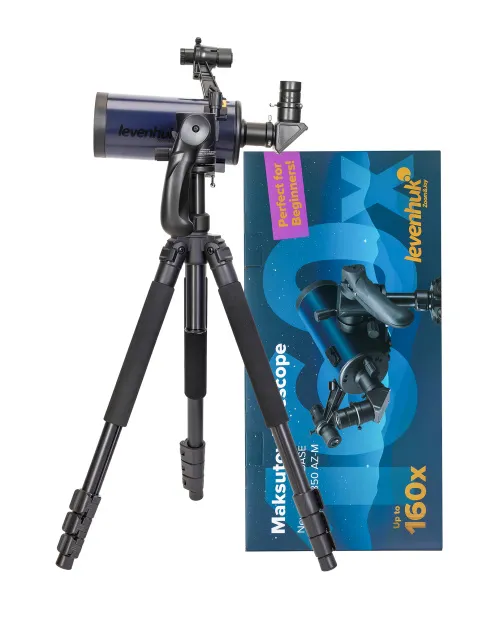
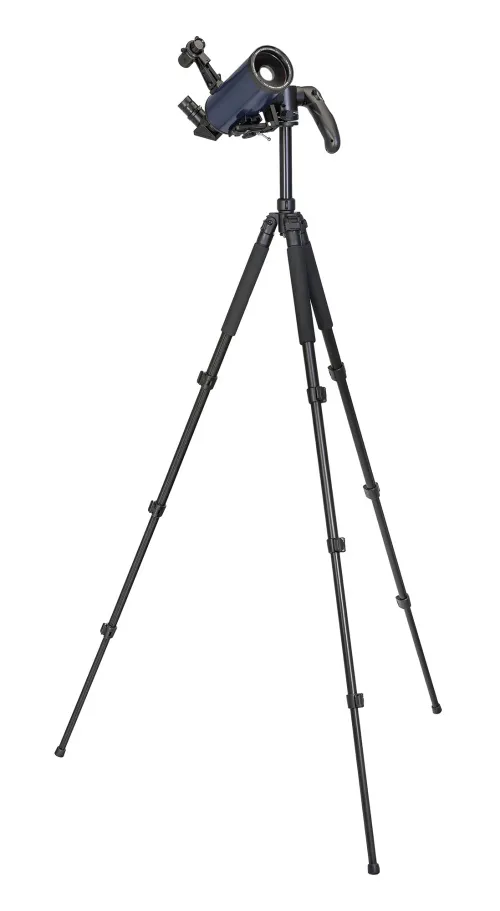
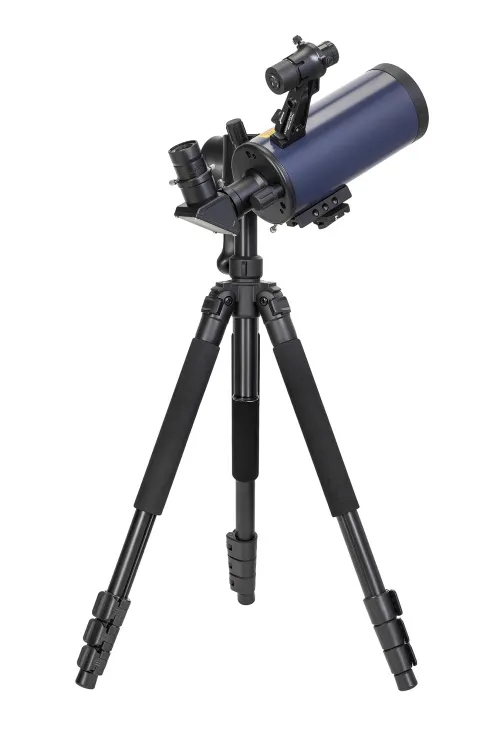
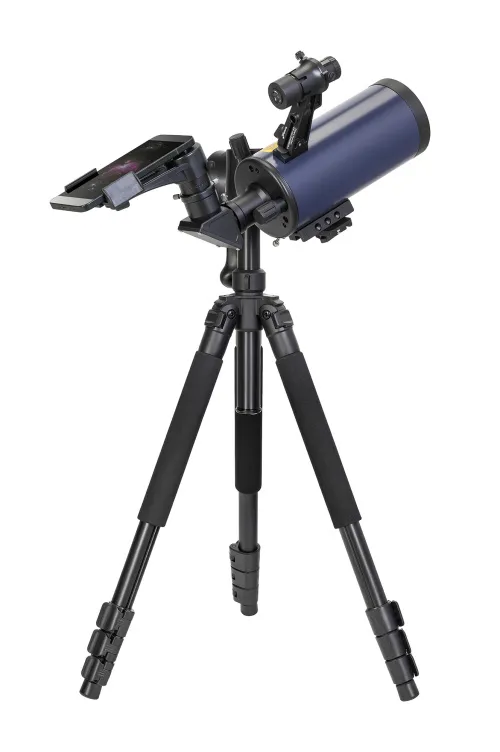
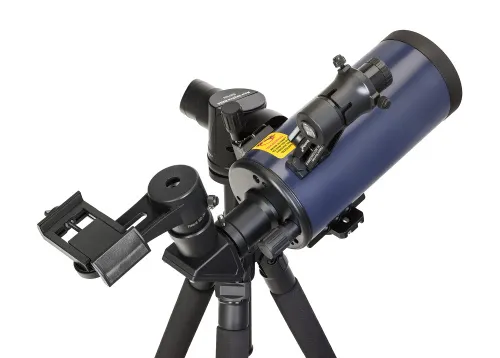
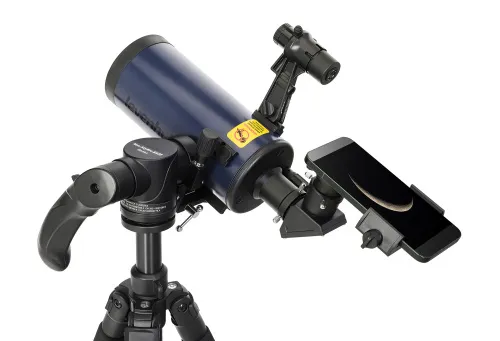
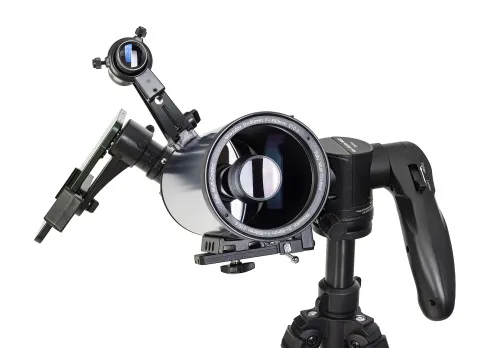
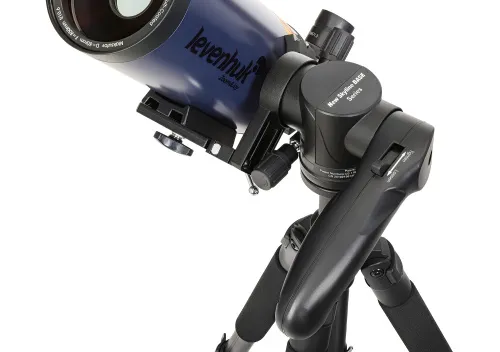
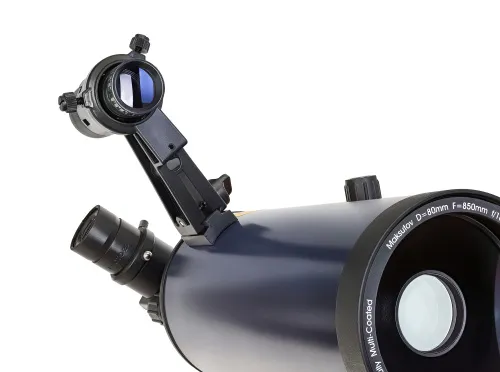
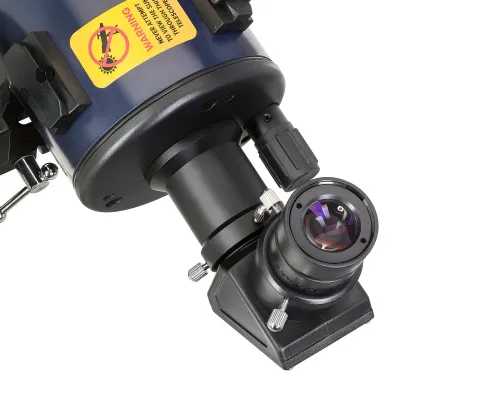

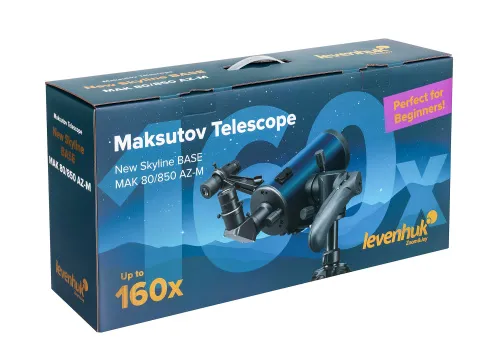
Maksutov-Cassegrain telescope. Lens diameter: 80mm. Focal length: 850mm
| Product ID | 86253 |
| Brand | Levenhuk, Inc., USA |
| Warranty | 50 years |
| EAN | 5905555027203 |
| Package size (LxWxH) | 24x7.1x12.6 in |
| Shipping Weight | 11.5 lb |
The Levenhuk New Skyline BASE MAK 80/850 AZ-M telescope reveals the breathtaking beauty of the universe, even for a beginner astronomer. Its Maksutov-Cassegrain optical design with an 80mm aperture and 850mm focal length strikes the perfect balance between compactness and power. The optics deliver high-resolution, contrast-rich images that are free from chromatic distortion, letting you observe many of the cosmos’s highlights.
This telescope is ideal for detailed studies of the lunar surface: You can explore craters (like Tycho, Copernicus, and Plato) and their ray systems, mountain ranges, dark maria, rilles, and promontories. Under good atmospheric conditions, you will be able to make out Jupiter’s disk and its main cloud belts. At magnifications above 80x, the famous Galilean moons appear as bright little stars near the planet. Saturn reveals its rings. While the telescope is designed for observing objects closer to home, it can also reveal nearby star clusters like the Pleiades, the Beehive Cluster, and the Hyades as fields of glittering points of light. For the best detailed views, it is a good idea to observe away from city lights.
Another advantage of this telescope over similar models is that it delivers a correctly oriented “terrestrial” image: up‑down and left‑right in the eyepiece match reality. This means that you can also use it for land‑based observations: studying landscape details, spotting distant targets, and more.
The optical elements in the Levenhuk New Skyline BASE MAK 80/850 AZ‑M are made from optical glass with a dual coating: an aluminum layer and a broadband anti‑reflection layer. The first boosts the telescope’s reflectivity, while the second eliminates stray reflections and increases light transmission across a wide wavelength range (from UV to IR).
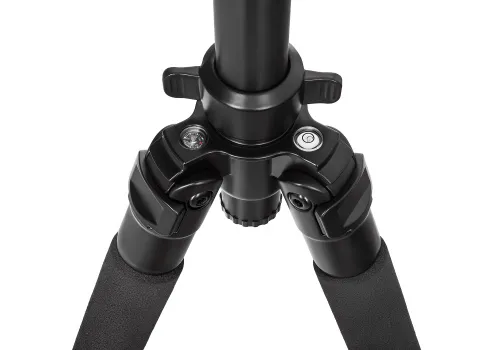
The telescope sits on an alt‑azimuth mount, which in turn is attached to the included aluminum tripod. The mount features a large, ergonomic pan handle with a convenient lock that is positioned right under your hand, making it easier and more precise to aim the telescope. You can also use the classic control method with two slow‑motion knobs.
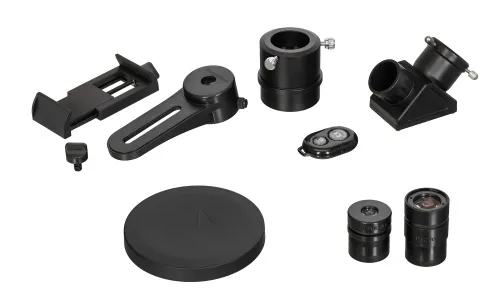
The package includes all of the essential accessories that you need in order to start observing right out of the box. So if you are giving it as a gift, the recipient will undoubtedly be delighted. The set contains a 6x21 optical finderscope with correct image, 10mm and 20mm eyepieces, a 90° erecting prism, a smartphone adapter, and two storage bags for the OTA and tripod.
Key features:
- An ideal choice for beginners who want to explore the Solar System and terrestrial landscapes both in and out of the city
- Dual coatings on the optics: aluminum and broadband anti‑reflection for sharp, clear images with no ghost reflections
- Maximum useful magnification of the system: 160x
- Alt‑azimuth mount with an ergonomic pan handle for intuitive control in any situation
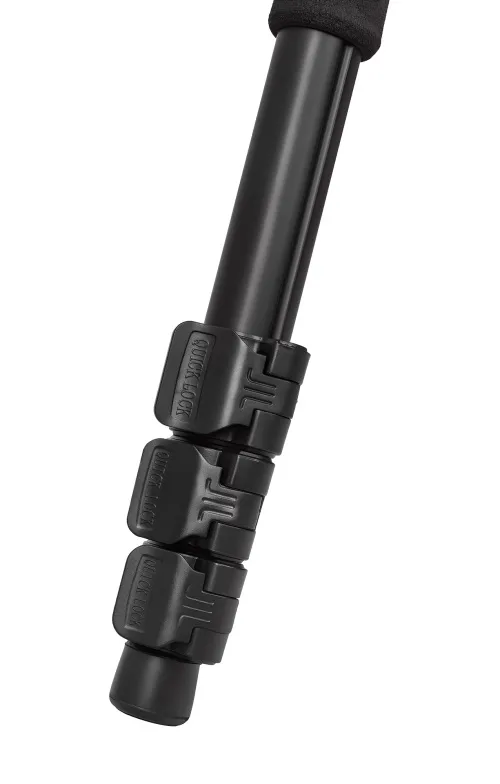
- Aluminum tripod with adjustable height from 56cm to 150.5cm
- Two storage bags to protect the OTA and tripod during transport and storage
The kit includes:
- Telescope optical tube
- Alt-azimuth mount
- 6х21 optical finderscope with correct image
- 90° erecting prism diagonal, 1.25"
- PHOTO eyepiece 10mm, 1.25"
- PHOTO eyepiece 20mm, 1.25"
- Aluminum tripod
- Vixen-style dovetail plate
- Smartphone adapter
- Carry bag for the optical tube
- Carry bag for the tripod
- User manual and warranty slip
| Product ID | 86253 |
| Brand | Levenhuk, Inc., USA |
| Warranty | 50 years |
| EAN | 5905555027203 |
| Package size (LxWxH) | 24x7.1x12.6 in |
| Shipping Weight | 11.5 lb |
| Optical design | catadioptric |
| Optical scheme | Maksutov-Cassegrain |
| Optics material | optical glass |
| Optics coating | aluminum, broadband anti-reflection |
| Primary mirror diameter (aperture), in | 3.1 |
| Lens (mirror) shape | spherical |
| Focal length, in | 33.5 |
| Highest practical power, x | 160 |
| Aperture ratio | f/10.6 |
| Resolution threshold, arcseconds | 1.5 |
| Limiting stellar magnitude | 11 |
| Eyepiece barrel diameter, in | 1.25 |
| Barlow lens | no |
| Finderscope | optical, 6x21 with correct image |
| Tripod | aluminum |
| Tripod height (adjustable), in | 22–59.3 |
| Telescope control | manual |
| Mount | alt-azimuth |
| Slow-motion controls | 2 slow-motion control knobs |
| Maximum payload, lbs | 5.5 |
| Additional | 90° erecting prism diagonal, smartphone adapter included |
| Optical tube mounting mode | dovetail plate (Vixen standard) |
| Dovetail mount | ✓ |
| User level | beginners |
| Assembly and installation difficulty level | easy |
| Observed object | planets of the Solar System, terrestrial objects |
| Pouch/case/bag in set | bag |
Convenient diagrams that describe how to install additional accessories on refractors and catadioptric telescopes
Find out how to assemble a telescope on an example of the Levenhuk Skyline 90x900 EQ telescope
This short guide will help you avoid typical mistakes and learn more about telescope and mounting types
The basics of astronomical observations for beginners
In this article we have gathered answers to some of the most frequently asked questions about telescopes
The most interesting celestial objects you can observe with Levenhuk telescopes
How telescopes work?
You can actually perform observations from your balcony!
All about telescope sizes, types, magnification, and mounts
Learn how to set up and use the telescope properly
Astronomy in light-polluted skies. Find out what you can observe in the city
Read an interesting comprehensive article on telescopes for little astronomers
The pictures are made with Levenhuk telescopes
Celestial objects you can observe with telescopes of different apertures
Colored and vivid images of galaxies, planets and star clusters entrance everyone who is fascinated by boundless space
Find an interesting review on the history of the changes to a refracting telescope
To make the process of choosing a telescope easier, we will tell you about the characteristics of the most popular types of telescopes today
Learn everything you need to know about refractor telescopes to make the right choice