
 BG
BG  BY
BY  CY
CY  CZ
CZ  DE
DE  EE
EE  ES
ES  EU
EU  GR
GR  HU
HU  IS
IS  IT
IT  LT
LT  LV
LV  MY
MY  PL
PL  PT
PT  RO
RO  SK
SK  TR
TR  UA
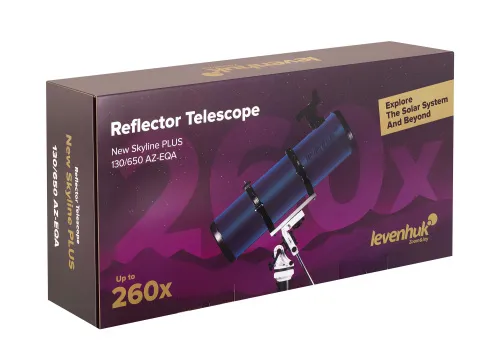
UA Levenhuk New Skyline PLUS 130/650 AZ-EQA Telescope
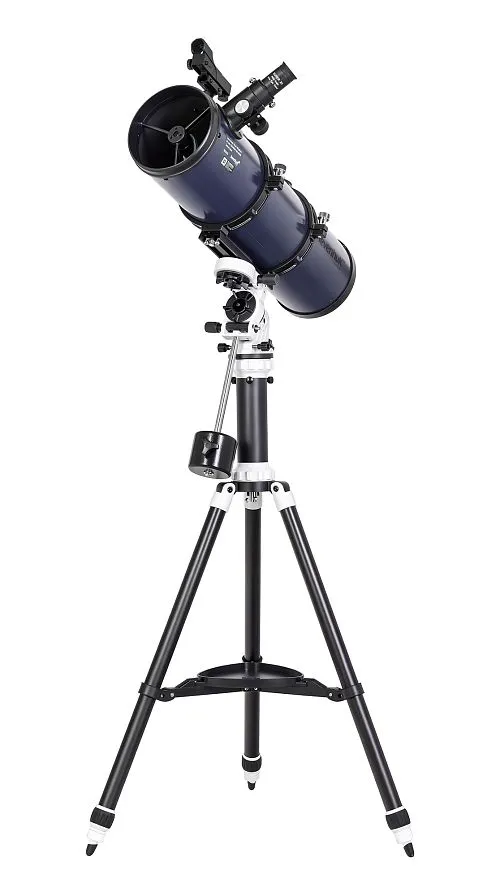
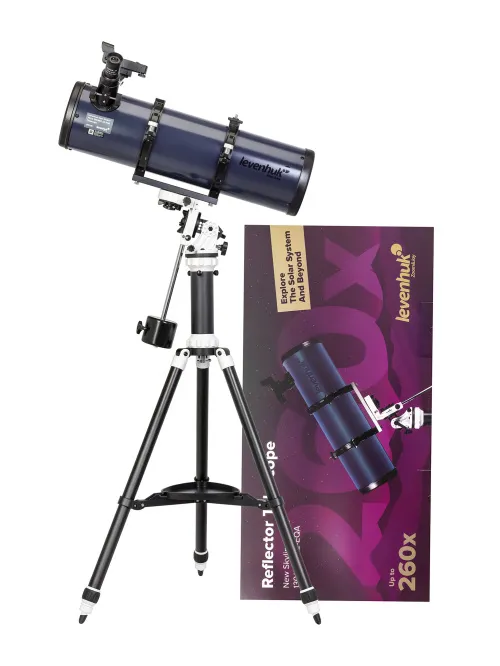
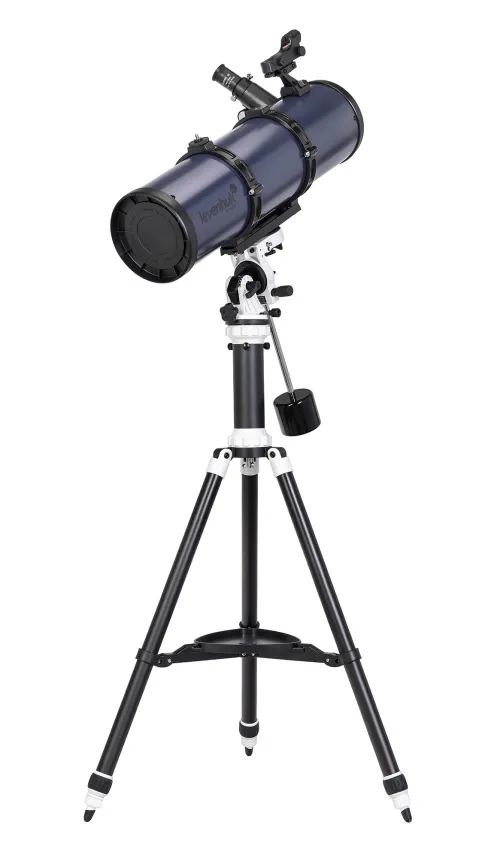
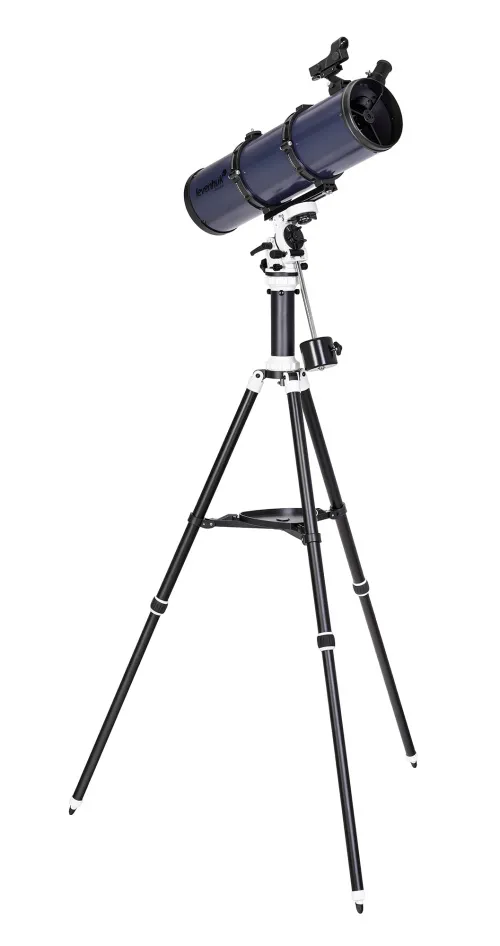
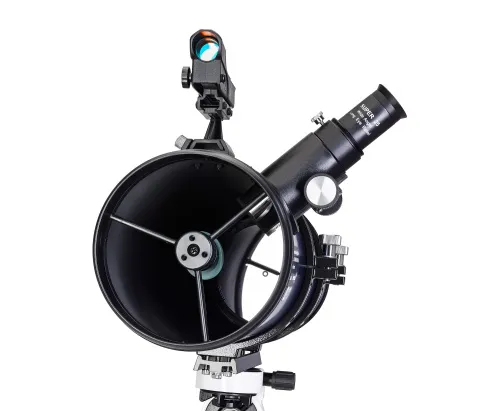
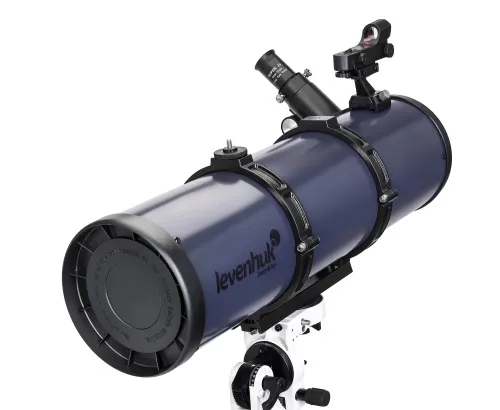
A Newtonian reflector for hunting nebulae, galaxies, and star clusters as well as exploring the lunar surface
| Product ID | 86216 |
| Brand | Levenhuk, Inc., USA |
| Warranty | 50 years |
| EAN | 5905555027098 |
| Package size (LxWxH) | 37x19.7x9.4 in |
| Shipping Weight | 31.3 lb |
The Levenhuk New Skyline PLUS 130/650 AZ-EQA is the next step for astronomers who have already outgrown less powerful systems and are ready to see more. With this telescope, deep-sky objects like nebulae, galaxies, and star clusters will open up to you. The 130mm aperture gathers 345 times more light than the naked eye, so even faint celestial targets won’t stay hidden.
Optical features you should know about
The Levenhuk New Skyline PLUS 130/650 AZ-EQA has a parabolic primary mirror. Its purpose is to properly collect and focus light rays at a single point, delivering a clear and high-contrast image with no color halos or blurring. At maximum magnification, the image remains sharp with good detail.
As a Newtonian reflector, the telescope requires periodic collimation to keep its mirrors perfectly aligned. This alignment can shift after transporting the device to the countryside or following a long period of heavy use. Mastering this simple process takes just 5 minutes, yet it guarantees years of unforgettable views and extends the useful life of your equipment.
What can you see in the night sky?
Our cosmic neighbor, the Moon, will be your first target. Thousands of large and small craters, mountain ranges, basalt seas, and rays from the Tycho crater will all appear right in front of you. The telescope also allows you to explore the Solar System, revealing equatorial belts on Jupiter’s disk and the structure of Saturn’s rings.
The telescope performs best during deep-sky observations. Depending on the magnification, the Andromeda Galaxy will appear as a bright core or as an oval cloud with a glowing center and a hint of its dust lane under dark skies. The Orion Nebula can be seen as a gray-green cloud with gaseous wings. Inside it, you will find the Trapezium, a cluster of four stars. Be sure to observe the Pleiades open cluster — a scattering of bluish stars against a black background, captivating even an experienced astronomer.
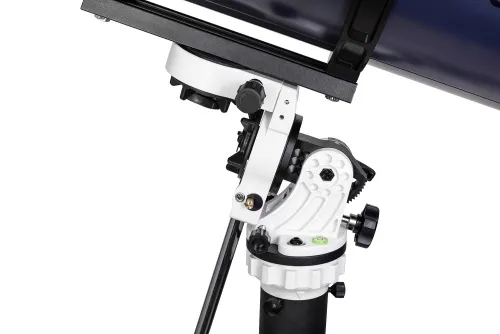
AZ-EQA dual altazimuth and equatorial mount
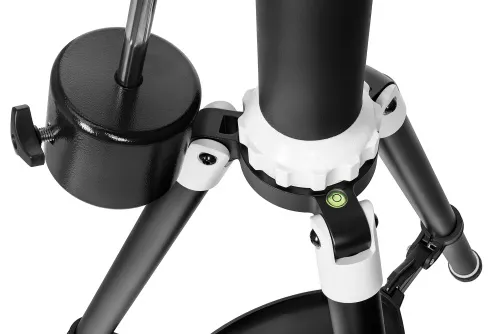
The optical tube sits on a versatile AZ-EQA mount that can work in both altazimuth and equatorial modes. The first mode lets you control the telescope like a spotting scope by quickly moving it up, down, left, and right. This is convenient for aiming at the Moon or bright planets and for browsing the sky in general. The second mode is needed to keep a specific object in the frame. After aligning the axis with Polaris, you only need to turn one knob to smoothly track the target across the sky, which is essential at higher magnifications when objects drift out of view quickly.
Full kit for a quick start
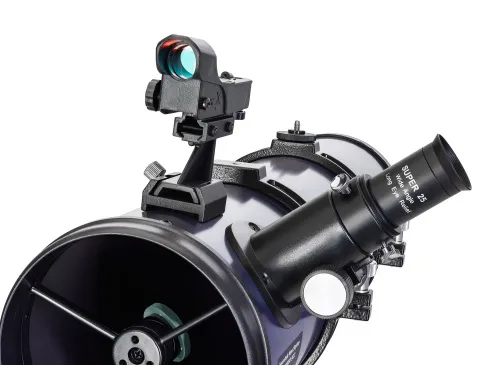
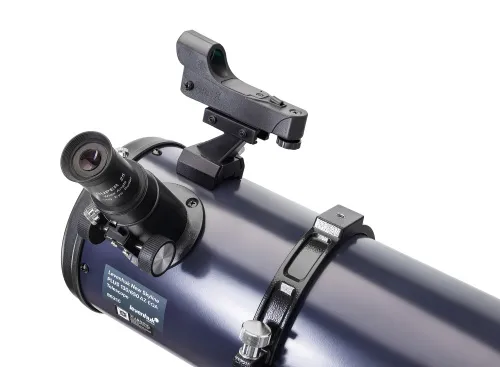
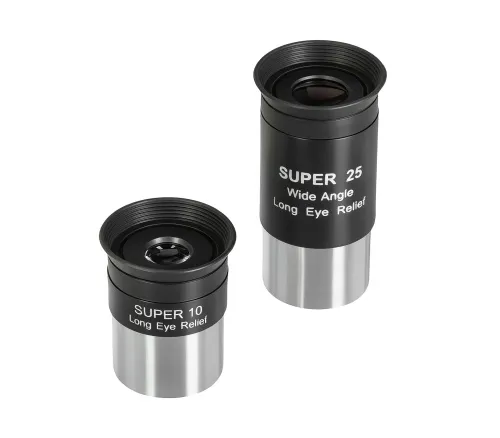
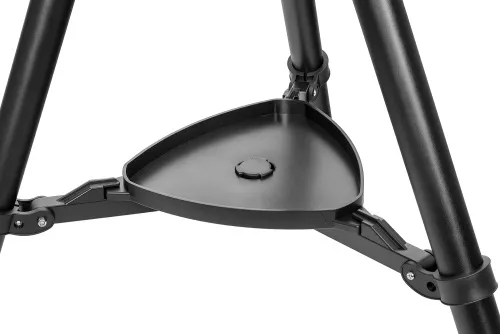
The Levenhuk New Skyline PLUS 130/650 AZ-EQA comes with everything you need to start observing right after unpacking. You get two SUPER eyepieces (10mm and 25mm), a red dot finder, an aluminum tripod with an accessory tray, a counterweight, and sturdy mounting rings for the optical tube.
Key features:
- A classic Newtonian reflector for observing deep-sky objects, the Moon, and the planets of the Solar System
- The parabolic primary mirror guarantees a sharp image, high contrast, and better visibility of faint objects
- A versatile mount with altazimuth and equatorial modes is included. Observe in the mode that best suits your evening goals.
- The SUPER 10mm and 25mm eyepieces provide 65x and 26x magnification. Switch between targeted and wide-field viewing anytime.
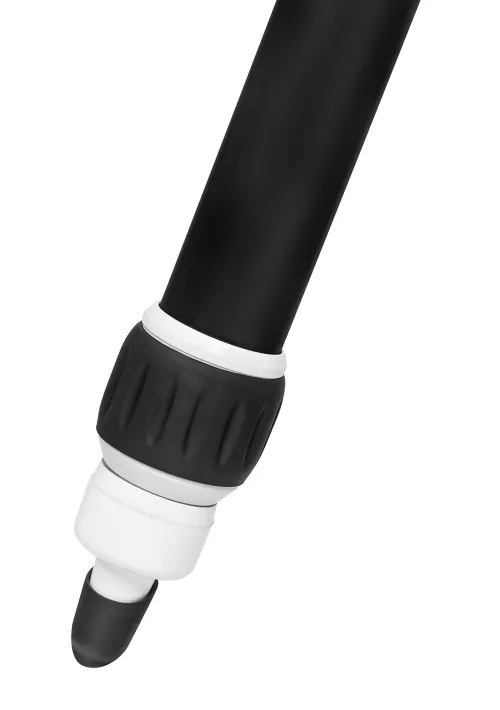
- The sturdy aluminum tripod ensures a stable image, while the accessory tray keeps your essentials always within reach.
- Its convenient size and weight make it easy to take along on countryside trips by car.
The kit includes:
- Telescope optical tube
- AZ-EQA altazimuth and equatorial mount
- SUPER eyepiece 10mm, 1.25"
- SUPER eyepiece 25mm, 1.25"
- Red dot finder
- Counterweight
- Counterweight bar
- Tube rings
- Aluminum tripod
- Accessory tray
- User manual and warranty card
| Product ID | 86216 |
| Brand | Levenhuk, Inc., USA |
| Warranty | 50 years |
| EAN | 5905555027098 |
| Package size (LxWxH) | 37x19.7x9.4 in |
| Shipping Weight | 31.3 lb |
| Optical design | reflector |
| Optical scheme | Newtonian |
| Optics material | optical glass |
| Primary mirror diameter (aperture), in | 5.1 |
| Lens (mirror) shape | parabolic |
| Focal length, in | 25.6 |
| Highest practical power, x | 260 |
| Aperture ratio | f/5 |
| Resolution threshold, arcseconds | 0.89 |
| Limiting stellar magnitude | 12.4 |
| Eyepieces | SUPER 10mm (65x), SUPER 25mm (26x) |
| Eyepiece barrel diameter, in | 1.25 |
| Barlow lens | no |
| Finderscope | Red Dot |
| Focuser | rack & pinion |
| Tripod | aluminum |
| Tripod height (adjustable), in | adjustable, 31.89–61.42 |
| Accessory tray | ✓ |
| Telescope control | manual |
| Mount | alt-azimuth and equatorial |
| Counterweights | yes |
| Optical tube mounting mode | attachment rings (included) |
| User level | experienced users |
| Assembly and installation difficulty level | easy |
| Observed object | deep-sky objects |
Convenient diagrams that describe how to install additional accessories on refractors and catadioptric telescopes
Find out how to assemble a telescope on an example of the Levenhuk Skyline 90x900 EQ telescope
This short guide will help you avoid typical mistakes and learn more about telescope and mounting types
The basics of astronomical observations for beginners
In this article we have gathered answers to some of the most frequently asked questions about telescopes
The most interesting celestial objects you can observe with Levenhuk telescopes
How telescopes work?
You can actually perform observations from your balcony!
All about telescope sizes, types, magnification, and mounts
Learn how to set up and use the telescope properly
Astronomy in light-polluted skies. Find out what you can observe in the city
Read an interesting comprehensive article on telescopes for little astronomers
The pictures are made with Levenhuk telescopes
Celestial objects you can observe with telescopes of different apertures
Colored and vivid images of galaxies, planets and star clusters entrance everyone who is fascinated by boundless space
Find an interesting review on the history of the changes to a refracting telescope
To make the process of choosing a telescope easier, we will tell you about the characteristics of the most popular types of telescopes today
Learn everything you need to know about refractor telescopes to make the right choice