
 BG
BG  BY
BY  CY
CY  CZ
CZ  DE
DE  EE
EE  ES
ES  EU
EU  GR
GR  HU
HU  IS
IS  IT
IT  LT
LT  LV
LV  MY
MY  PL
PL  PT
PT  RO
RO  SK
SK  TR
TR  UA
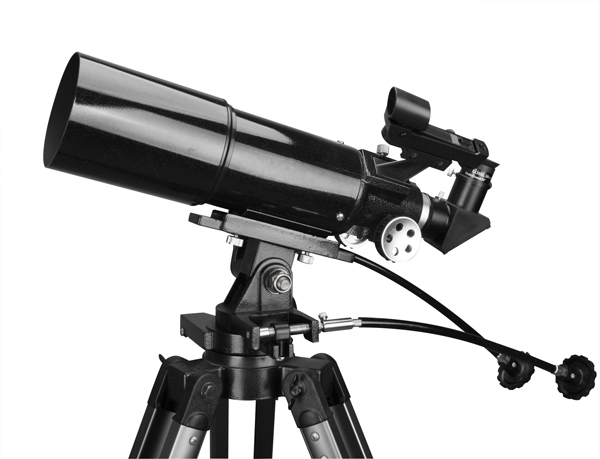
UA Levenhuk Skyline 80x400 AZ Telescope
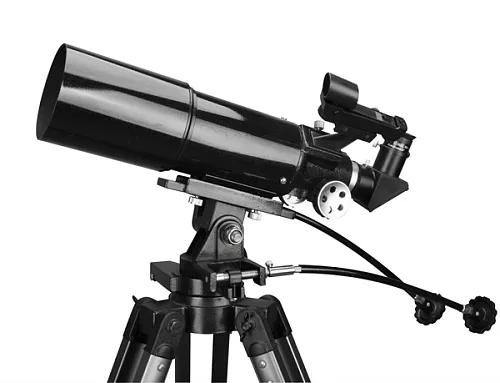
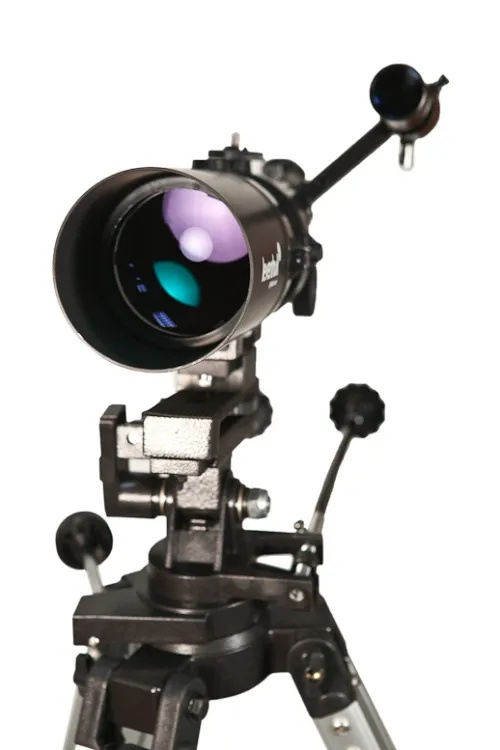
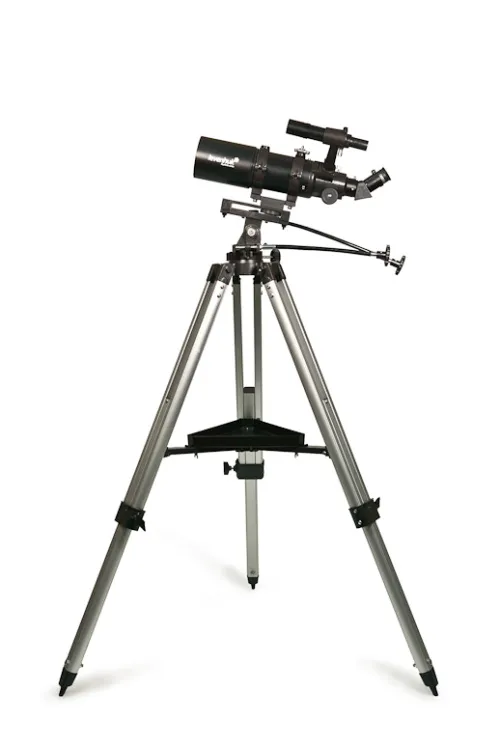
Refractor. Objective lens diameter: 80 mm. Focal length: 400 mm.
| Product ID | 24294 |
| Brand | Levenhuk, Inc., USA |
| Warranty | lifetime |
| EAN | 2400000000983 |
| Package size (LxWxH) | 17.3x37.4x9.1 in |
| Shipping Weight | 30.9 lb |
Levenhuk Skyline 80x400 AZ provides an opportunity to never stop your astronomical and terrestrial observations, no matter where you are. Due to the "shortened" focal length (400 millimeters, 15.8 inches), it has a very compact set size which makes it convenient for transportation. You might even be able to take it on board during air travel! At the same time, this refractor has high optical performance. An aperture of 80 millimeters (3.15 inches) makes it possible to collect enough light to observe not only the planets and their satellites, but also the globular clusters and nebulae. Moreover, thanks to the high resolution (1.5''), all the observed objects will look sharp and detailed. Therefore, it can also be used for observing double stars. With this telescope you will be immersed in researching the structure of sunspots, lunar craters, seasons change on Mars, and much more. Under good conditions the telescope can help you see Messier objects and some of the brighter NGC.
Features:
- The telescope has a factory default adjustment and does not require additional and frequent adjustment;
- Contrast and sharp images in high resolution without chromatic aberration;
- Can be used for photographing the Moon and planets;
- Suitable for both terrestrial and astronomical observations;
- Ideal for planetary observations and observations of binary stars;
- Suitable for beginners.
The telescope is mounted on a powerful and stable mount AZ3, which is well suited for medium-sized telescopes. The mount has a clamp and a mechanism for subtle movements along the vertical and horizontal axes. It is convenient for conducting ground-based observations, and can be successfully used for astronomy. Its primary advantage is its light weight. the aluminum tripod has a height adjustment.
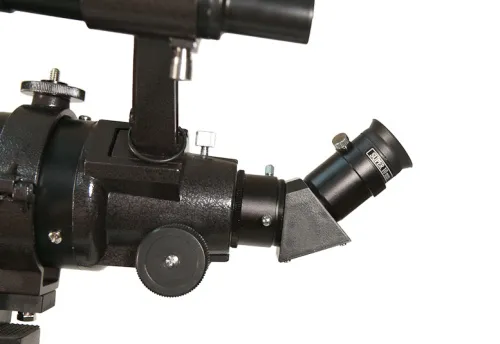
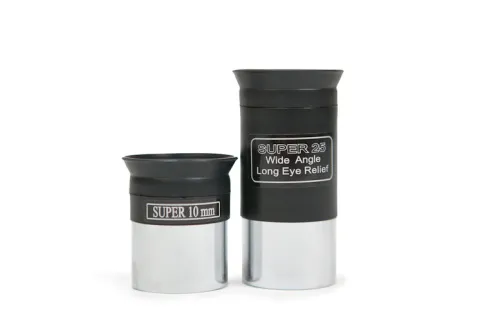
Two achromatic eyepieces SUPER 10 and SUPER 25 with a 1.25-inch (31.75-millimeter) diameter are included in the package and serve as powerful image correction tools. The optics used in the eyepiece are glass with a special coating. The field of view is 50-52 degrees.
Find out the names of the most interesting celestial objects to observe here and here.
| Product ID | 24294 |
| Brand | Levenhuk, Inc., USA |
| Warranty | lifetime |
| EAN | 2400000000983 |
| Package size (LxWxH) | 17.3x37.4x9.1 in |
| Shipping Weight | 30.9 lb |
| Optical design | refractor |
| Optical scheme | achromat |
| Objective lens diameter (aperture), in | 3.1 |
| Focal length, in | 15.7 |
| Highest practical power, x | 160 |
| Aperture ratio | f/5 |
| Resolution threshold, arcseconds | 1.7 |
| Limiting stellar magnitude | 11.5 |
| Eyepiece barrel diameter, in | 1.25 |
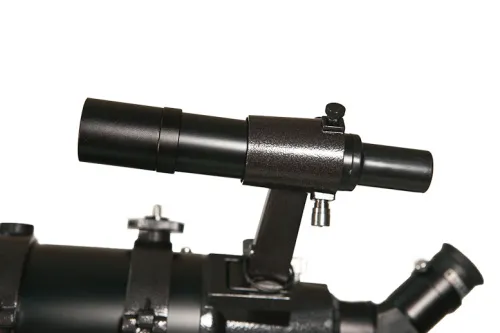
| Finderscope | 6х30 |
| Tripod | aluminum |
| Tripod height (adjustable), in | 27.95–49.21 |
| Mount | alt-azimuth |
| User level | for children, beginners |
| Observed object | planets of the Solar System |
Convenient diagrams that describe how to install additional accessories on refractors and catadioptric telescopes
Find out how to assemble a telescope on an example of the Levenhuk Skyline 90x900 EQ telescope
This short guide will help you avoid typical mistakes and learn more about telescope and mounting types
The basics of astronomical observations for beginners
In this article we have gathered answers to some of the most frequently asked questions about telescopes
The most interesting celestial objects you can observe with Levenhuk telescopes
How telescopes work?
You can actually perform observations from your balcony!
All about telescope sizes, types, magnification, and mounts
Learn how to set up and use the telescope properly
Astronomy in light-polluted skies. Find out what you can observe in the city
Read an interesting comprehensive article on telescopes for little astronomers
The pictures are made with Levenhuk telescopes
Celestial objects you can observe with telescopes of different apertures
Colored and vivid images of galaxies, planets and star clusters entrance everyone who is fascinated by boundless space
Find an interesting review on the history of the changes to a refracting telescope
To make the process of choosing a telescope easier, we will tell you about the characteristics of the most popular types of telescopes today
Learn everything you need to know about refractor telescopes to make the right choice